

In 2024 researcher Johanna Olson-Kennedy came to national prominence after a hit piece by The New York Times’s reporter Azeen Ghorayshi strongly suggested that she tampered with her research in order to hide results unhelpful to trans advocates. This article released a tidal wave of right-wing attacks against her, including a lawsuit by a detransitioner who claimed that Olson-Kennedy had rushed her into treatment. The lawsuit has since been dismissed.*
The research in question was a study of puberty blockers that was released in pre-print form last May. (“Pre-print” refers to research that is on its way to publication but has not yet been peer reviewed.) Per the draft, Olson-Kennedy found that puberty blockers did not decrease the suicidality of trans youth, but that the youth studied had suicide levels comparable to their cis counterparts—a major accomplishment given that a study from the Williams Institute found that some 30% of trans kids attempt to end their lives, compared to 9% of the group that Olson-Kennedy studied.
In expert testimony regarding the case Misanin v. Wilson (in which a trans youth filed a lawsuit to gain access to gender-affirming care), Olsen-Kennedy disputed Ghorayshi’s framing of the story, stating unequivocally that her only purpose is to provide the very best research she is capable of:
Based on a misleading title and selective quotations, the article by Ms. Ghorayshi presents an inaccurate and misrepresentative picture of the status of research I, along with others, have been conducting. . . .
It is false that I, or anyone involved in the NIH-funded study, has withheld publication of data because of politics, as the headline of Ms. Ghorayshi’s article falsely states.
As Olsen-Kennedy further explained, she has been the principal investigator on a major study of trans youth that has lasted for 8 years and has released over a dozen research papers. “As even the article acknowledges, we have every intention to publish our data but the length of time it has taken to do so is attributable to the sheer amount of work and resources required to do so accurately, transparently, and clearly.”
This all brings us to research that Olsen-Kennedy and her colleagues published in July 2025, two months after the pre-print on puberty blockers. In this later study, they released the findings from the study of 315 trans youth aged 12 – 20 who had been on gender-affirming hormone replacement therapy for 2 years. The results speak for themselves: “significant improvements in AC [appearance congruence], psychological well-being, social satisfaction and self-efficacy, and significant reductions in negative affect and negative social perception.” That is HRT significantly improved these youths’ emotional health while making them like their bodies much more.
Interestingly, Olsen-Kennedy found very high marks for the impacts of HRT on the bodies of those studied, in spite of the fact that 92% of her participants had already experienced “much or most” of the puberty associated with their birth sex. In order to measure this, which they termed “appearance congruence,” they used the Transgender Congruence Scale, a series of 12 statements that measures the degree to which a trans person feels comfortable with their appearance and gender identity. Readers may find it interesting to click over and see how they score on this scale.
Olsen-Kennedy also found that those who had experienced less puberty when they entered the study with better mental health: “Participants who began GAH treatment without having experienced endogenous puberty beyond Tanner stage 3 had significantly higher psychological well-being scores and self-efficacy at baseline than those who had experienced their endogenous puberty beyond Tanner stage 3.” Another vote in favor of puberty blockers that Ghorayshi might want to inform herself of.
The study found some fascinating tidbits for future study: first, youth who entered the study at an older age saw their mental health improve at a faster rate. Olsen-Kennedy surmised that this may be either due to the fact that older youth tend to be given larger initial doses of hormones, or simply because they are happier to start HRT because they have been waiting longer.
Secondly, the study found that “non-White Latine/Hispanic participants had significantly higher baseline [appearance congruence] scores.” Olsen-Kennedy and colleagues theorized that this may be due to different gendered expectations regarding appearance in various ethnic groups.
This latest study adds to the many papers that Olson-Kennedy and colleagues have released over the years researching the benefits of giving trans youth the medical treatment they desire. It is very unfortunate that her important work has been politicized by entities including The New York Times, muddying the waters on this research and causing much personal strife to Olson-Kennedy herself. Research conducted for the betterment of children should be celebrated, and the clear verdict of such research should be used to protest the injustice of those who seek to prevent children from receiving this medical care.
*CORRECTION: An earlier version of this story stated that the lawsuit had been dismissed as without merit. It was dismissed for having exceeded the statute of limitations.
Veronica Esposito (she/her) is a writer and therapist based in the Bay Area. She writes regularly for The Guardian, Xtra Magazine, and KQED, the NPR member station for Northern California, on the arts, mental health, and LGBTQ+ issues.




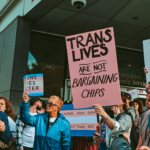
This is a lie. She even stated she withheld the poor results of the study because she didn’t want them "weaponized" against the BS she was the main architect of.
Olson-Kennedy says she was selectively quoted by a reporter with an agenda, and given this reporter’s past behavior I’m inclined to believe her.
https://www.assignedmedia.org/breaking-news/you-betrayed-us-azeen-parents-of-trans-youth-reeling-after-speaking-to-the-nyt
It’s so nice to get to hear the real story from actual research instead of the fearmongering pablum extruded by NYT et al. Ghorayshi’s smear piece has been so successful I even noticed it cited in the preamble to HHS’s proposed rule banning trans youth healthcare coverage by Medicaid. As bizarre as all of the anti-trans nonsense is, it still struck me as strange that a federal government entity would make something so minor and irrelevant such a centerpiece. If decades of research into trans youth constitutes low-quality evidence, what is the possible value of a single biased newspaper article about a sole researcher? Talk about low-quality evidence. It shows they are primarily concerned with turning the uninformed public against trans people.
Azeen –
It is important to be precise in your work. Breen’s case against JOK was not "dismissed as without merit". It was dismissed because it was filed beyond the date required by the applicable statute of limitation.