

A new detransition lawsuit advancing the theory that gender-affirming care constitutes gay conversion therapy was filed last month in Massachusetts. The suit was filed on behalf of a gay man referred to in the suit by his legal name, July Carlan, and by an alias, Shape Shifter. It claims that the treatments Carlan pursued over many years for his gender dysphoria amounted to conversion therapy, because the provider, Fenway Health, should have known Carlan would later come to believe he was motivated by internalized homophobia. By not discerning this ten years before it happened, the suit claims, Fenway was engaging in conversion therapy.
According to the lawsuit, Carlan’s first appointment at Fenway happened months after he had already begun to live full time as a trans woman, in 2012. After two appointments he was approved and started hormone therapy. He continued living as a trans woman and after several years and extensive therapy eventually obtained gender reassignment surgery in 2015. In 2022 he announced he was detransitioning, and now feels intense regret over his surgery.
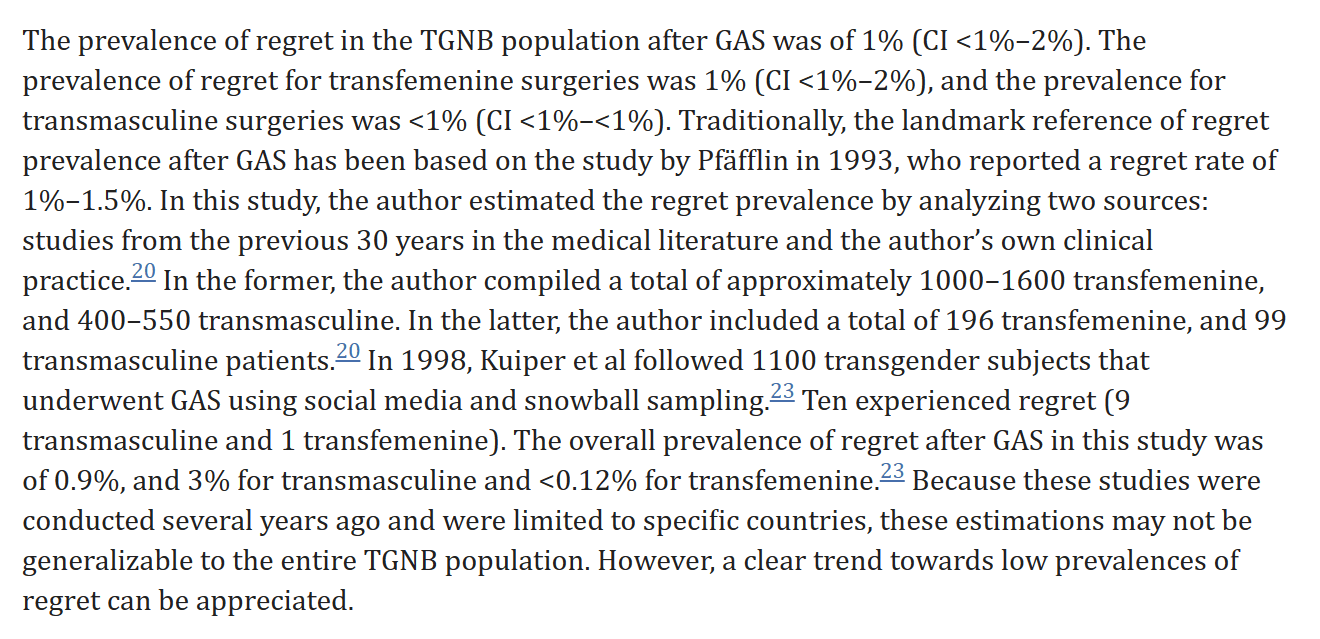
In this, Carlan is very much an outlier. While detransition rates overall can be difficult to pinpoint due to differing definitions and time frames, transgender surgical regret is comparatively well-studied. In 2021, a systemic review of the literature on surgical regret found a 1 percent average rate of regret for transfeminine surgeries like the ones Carlan underwent, with results ranging from <1% to 2%.
The lawsuit makes it clear that Carlan was identifying as a trans woman for years before seeking approval for surgery, that he underwent months of therapy with one provider and multiple meetings with a second to acquire the letters needed for surgery, and then continued to live as a trans woman for years before detransitioning. However, because providers affirmed Carlan (meaning that they used his preferred pronouns and name and didn’t challenge or dispute his identity), the suit suggests Carlan lost the opportunity to consider the possibility that he might be a gay man suffering from internalized homophobia.
This, the suit claims, amounts to conversion therapy.
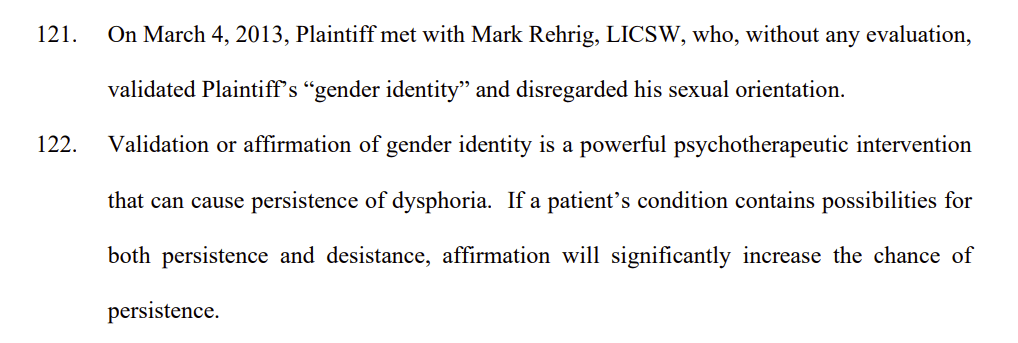
The logic of how affirming someone as trans could be claimed to be conversion therapy is a bit convoluted, so it’s worth looking at in more detail. The suit claims (on page 29, number 181) “sexual orientation is immutable” and does not change, but that gender identity can be so easily changed that if a provider merely fails to challenge it this risks locking a person into a transgender identity.
Conversion therapy is usually described as an effort by a therapist to challenge or undermine a person’s self-described sexual orientation or gender identity with the goal of changing it. It’s considered harmful because it doesn’t work: People don’t choose their sexual attractions or their gender identities, and attempting to change them causes intense shame, stress, and is ultimately unsuccessful. (This doesn’t mean sexual attractions are unchanging. Some people who once believed themselves to be entirely straight later come to experience attractions to members of the same sex, and some people who ones believed themselves to be entirely gay come to experience opposite sex attractions.)
In this suit, conversion therapy to change a person’s sexual orientation is being defined so broadly that by not challenging a patient’s gender identity a therapist is preventing them from desisting. In other words, to not practice gay conversion therapy the lawsuit claims the law mandates providers first attempt transgender conversion therapy.
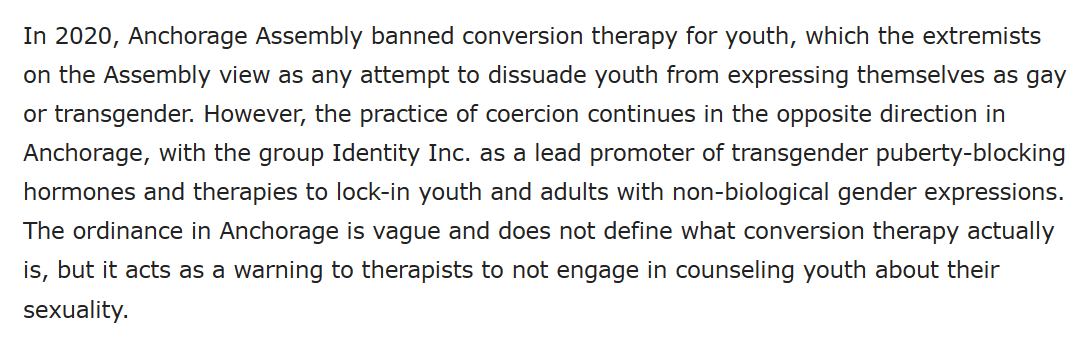
The lawsuit received little or no press attention until a story posted yesterday on the Republican blog Must Read Alaska. The Must Read Alaska story picks up the thread that affirmation constitutes conversion and amplifies it, repeating the theory that by not challenging a trans person’s identity a provider is locking them into it.
Therapy to change a person’s gender identity is as ineffective as therapy to change a person’s sexual orientation. That doesn’t mean that, in rare cases, a person’s beliefs about their own gender can’t change on their own, just that therapists attempting to force a person to be cisgender is damaging and futile. The plaintiff in Shape Shifter v Fenway believes that if someone had subjected him to conversion therapy in 2012, he wouldn’t have found himself in the 1 percent of people who regret a surgical transition in 2022. This is fanciful. There’s no evidence that conversion therapy attempts are more successful for trans people than they are for gay people, which is why attempts to change gender identity are often covered by bans on conversion therapy.
By claiming that affirming a trans identity amounts to converting a gay one, the lawsuit seeks to undermine the logic of conversion therapy bans, which is likely why it was so attractive to a GOP blogger.





It looks like the first attention this lawsuit had is this from Leor Sapir on Nov 8th, who interviewed Carlan : https://www.city-journal.org/article/medicine-with-a-transgender-bias
Thank you for sharing this!
incidentally, Sapir is on record saying that he believes that so called "compassion" in Europe, where trans medical treatments are still allowed albeit to a lesser extent, is not the right call.
this after he literally wrote an article saying that Florida’s original plans for restricting gender care, which more closely resembled Europe’s, were "compassionate."
I hope this is thrown out because in no way did anyone attempt to change his sexuality.
He’s attracted to men. Surgery to make him a woman goes from same-sex attracted to opposite-sex attracted. Gay to straight. Conversion therapy. Imagine if the Christians who did Pray Away the Gay had come up with it first. He likes men? Must be a woman inside, so give him drugs, hormones and surgery so he isn’t a gay man.
There is a lower regret rate for gender affirming surgeries than any other type of surgery. People are more likely to regret knee surgery or getting their wisdom teeth out, by a large margin.
About half of trans people are gay or bi, after transitioning.
Trans people have to jump through thousands of hoops to transition. There is a constant barrage of paperwork, explanation, self defense, and fighting required to transition.
This is just a transphobic attack, and if it isn’t thrown out it is a breach of justice.
They’re out-postmodern/gender theorizing the most postmodern gender theorists out there.