

Miss Major Griffin-Gracy, a beloved Black trans community organizer passed away in October, and on December 6, queer and trans community members and allies from across the country gathered at a San Francisco memorial service in her honor. A celebrated activist for Black liberation and prison abolition, Major was the first executive director of the Transgender Gender-Variant & Intersex Justice Project (TGIJP), which has since been renamed the Miss Major Alexander L. Lee TGIJP Black Trans Cultural Center in honor of Major and founder Alexander L. Lee.
The service was held at Glide Memorial Church, a non-denominational, social justice-focused spiritual center located in San Francisco’s Transgender District. The memorial included reflections from “Mama” Major’s friends and loved ones, tributes from community members, and joyous music from Bishop Yvette Flunder, the City of Refuge UCC Choir, and the Heartbeat Collective Drum Corps. (Videos of the livestreamed event are available on YouTube.)
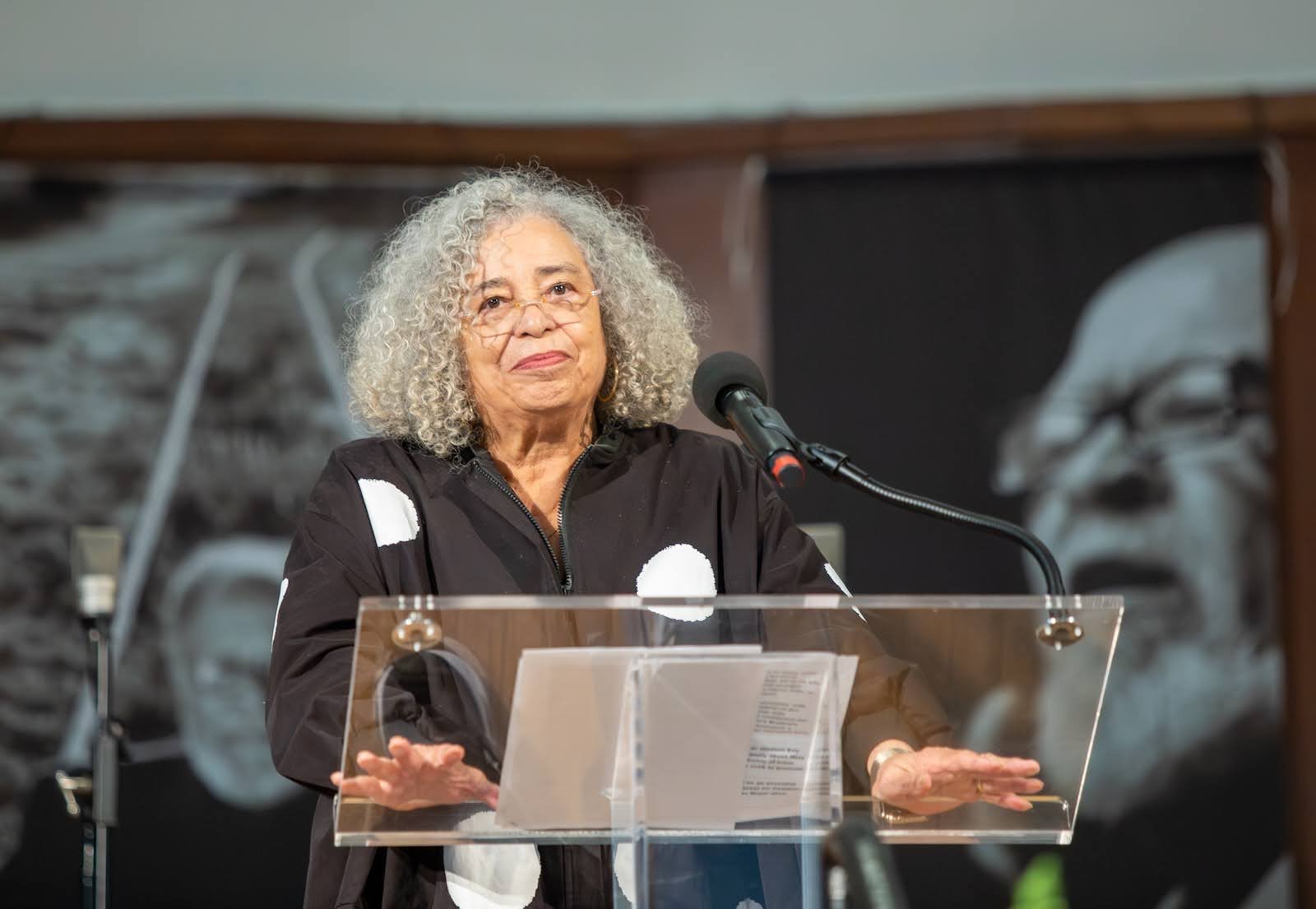
Preeminent Black feminist activist Angela Davis spoke at the memorial, highlighting the importance of Major’s contributions to the community. “I am personally, deeply thankful that I had the opportunity to be in her presence,” Davis stated. “Miss Major made me recognize that all of us who identify as Black women, queer and straight, we all need to make a very special effort to stand with – and in the very first place – Black trans women.”
In another highlight, Major received a certificate of Congressional recognition from representative Lateefah Simon, delivered by district director Eden Chan, and a proclamation from Oakland mayor Barbara Lee declaring October 25 – Major’s birthday – as “Miss Major Griffin-Gracy Day”. The proclamation was delivered by Kin Folkz (they/them), an artist, activist, and TGIJP board member.

Assigned Media reached out for memories and perspectives from Kin Folkz as well as Janetta Johnson (she/her), TGIJP CEO and Transgender District co-founder, and Zy’aire Nassariah (he/him), TGIJP co-executive director. Both Johnson and Nassariah were formerly incarcerated, and both were hired by TGIJP while they were still serving time in prison.
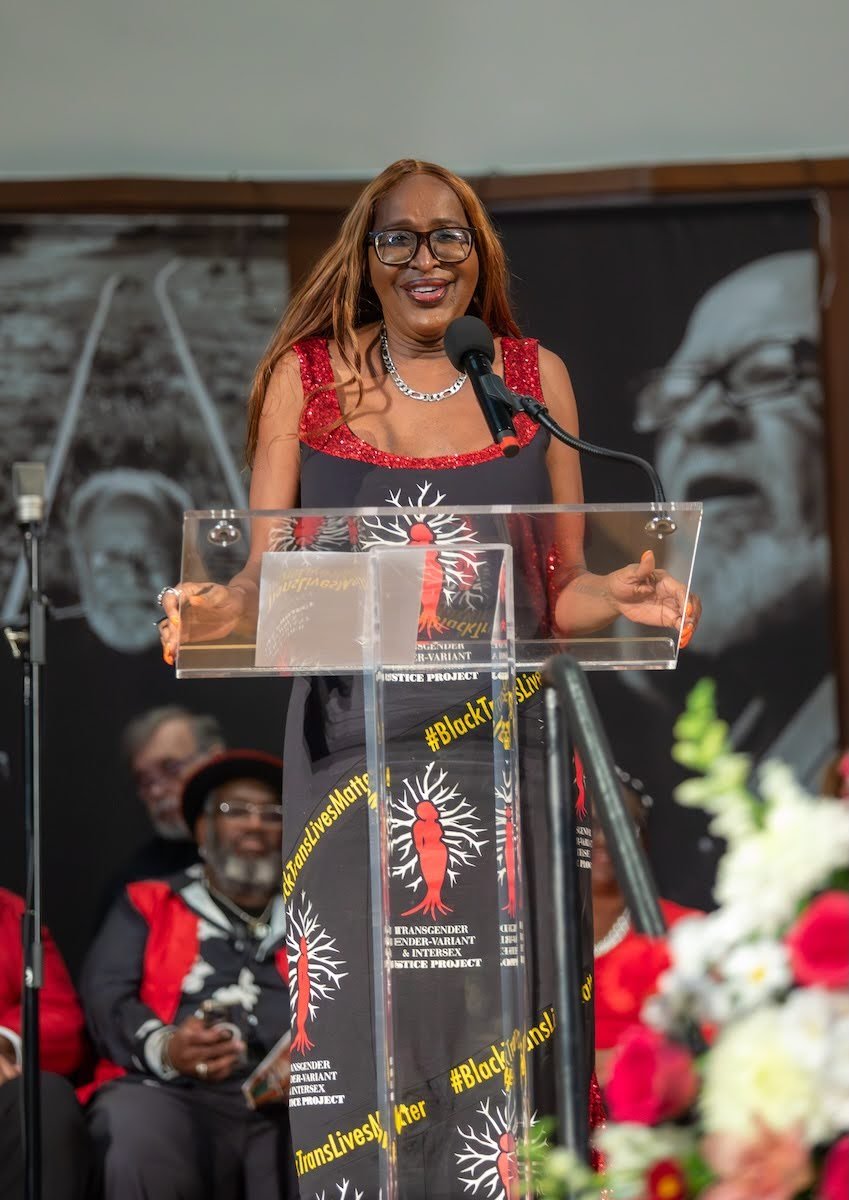
Favorite memories of Miss Major
Janetta Johnson, who was first daughter to Miss Major, recalled Major’s visit to San Francisco for the ribbon-cutting of the TGIJP center that now bears her name. “It was her vision to have Black trans ownership in San Francisco and with her mentorship and support we were able to make that happen!”, she said. “I am so proud that as a Black trans woman I was able to name a building owned by the Black trans community after my Black trans Mama!”
Kin Folkz remembered how loving Major was. “I remember sitting with her, listening more than speaking, and feeling profoundly seen as an autistic, disabled, Black, Native American, GNC QT person in a world that often pretends we don’t exist,” they said. “She had a way of making you feel safe and accountable at the same time—like, baby, I love you, and now what are you going to do with that love?”
Nassariah spoke of not a specific moment with Major, but his “journey from learning her name through prison walls to standing before her in freedom.” When he did meet her in person, he felt blessed by her smile and gentle touch. “Miss Major had a radically forgiving heart. She forgave without performance, loved without condition, and saw potential where others saw pathology.” He was also moved when Major immediately flew out to comfort Janetta in a time of crisis while she was battling illness herself.
On hope for a truly liberated future for Black and Brown folks
For Johnson, what gives her the most hope is seeing “what we have built together so far and against all odds,” “our community stand up and invest in what we can build together when we imagine a world beyond prisons”, and “the conversation about abolition in the United States begin to grow branches from these strong roots that our ancestors have grown in the foundation of this movement”.
What gives Kin Folkz hope is “Black and Brown trans, GNC and queer people imagining futures beyond cages, beyond capitalism, beyond respectability”, as well as mutual aid, chosen family, young people, and “elders like Mama Major who taught us that liberation is collective—or it isn’t liberation at all.”
For Nassariah, “my greatest hope comes from seeing Black and Brown children imagine futures we were told to fear.” He sees hope in “no longer waiting for gatekeepers to recognize our humanity”, “witnessing our shift from survival into authorship”, “the growing refusal to normalize harm”, and “Black trans leadership designing futures instead of being studied or spoken for.”
Priorities for improving the lives of currently and formerly incarcerated trans folks
Johnson emphasized the need for the government of San Francisco to “support the close to 300 Black and Brown formerly homeless trans people that we currently have in housing.” She asked local gay homeowners to consider donating or leaving their estates to TGIJP, noting that “the freedom the TLGBQ2IAS+ community experiences is won off the backs of Black trans women. We pay a price that no one else will ever know.” She also demanded that the private prison corporation GEO Group be ousted from the historic site of Compton’s Cafeteria.
Nassariah made it clear that his priority is not to reform prisons, but to eliminate them entirely. “My ask is to build conditions where trans people, and everyone else, can live without being criminalized. I want a world where conflict is met with care, not confinement, where accountability does not require cages.” He wants to shift money and power from prisons and policing to trans-led community services, guided by the paid expertise of formerly incarcerated trans people.
Kin Folkz also wants to end incarceration, following the expert guidance of the formerly incarcerated. They considered their highest asks to be humane, not radical. They have stated those asks:
Abolish solitary confinement and gender-based housing that places trans folks in danger.
Guarantee access to affirming healthcare, including hormone therapy, mental health care, and disability accommodations inside and outside of carceral spaces.
Fund community-led reentry support—housing, income, healthcare, and dignity—without surveillance.
As Mama Major and Janetta Johnson have said countless times: “Pay Us!”
Closing thoughts from Mama Major’s Followers
Janetta Johnson: “The antidote to fascism is community care… Abolition begins at home; decolonize your mind, connect with people and the land, and honor Indigenous wisdom… None of us are free until all of us are free.”
Kin Folkz: “If we truly want to honor [Miss Major], we must invest in living trans and GNC people with the same ferocity we offer flowers once they’re gone. Love us while we’re here. Protect us while we’re breathing. Free us while we can still feel it.”
Zy’aire Nassariah: “Liberation for me is not access to the master’s house. It is the refusal to live in captivity, even when captivity is disguised as care… I survived decades inside a cage. I know how captivity pretends to be support. My work and my voice are dedicated to making sure others are not tricked by that same lie…. We are not asking for inclusion. We are insisting on transformation.”
Pax Ahimsa Gethen (they/them) is a queer Black trans writer and editor. They live in San Francisco with their spouse Ziggy.




Thank you packs for this beautiful account of this most auspicious occasion! This article is truly inspiring! I’m so proud of our community and the way we come together to imagine a better future. We are so blessed to have known Mamma, Major, and to have studied in her care!