
R was just 15 when she fled with her family to Bangladesh to escape a brutal crackdown by the Myanmar military that targeted the Rohingya ethnic minority.
“They would do anything with us,” she told Assigned Media, in an interview ahead of hearings in The Hague, where Myanmar stands accused of genocide for its so-called 2017 clearance operations, a campaign of state violence following an attack by a Rohingya insurgent group.
A minority within a minority, R’s plight is made even more difficult by being transgender. She refers to herself as hijra, an umbrella term for trans and intersex people in Southeast Asia.
“We’ve suffered for years and years, years of torture and brutality,” R says. She did not want to use her full name out of concerns for her safety. “We have really high hopes for this.”
When the West African country of Gambia first filed the complaint at the International Court of Justice in 2019, R had been living in a densely packed refugee camp in Bangladesh for nearly two years. Sharing a tent with eight other family members, she survived on humanitarian aid as did the nearly 700,000 other Rohingya.
“We just want to live normal lives,” said S, another Rohingya hijra who spoke to Assigned Media from a refugee camp. She also did not want to use her full name over safety concerns.
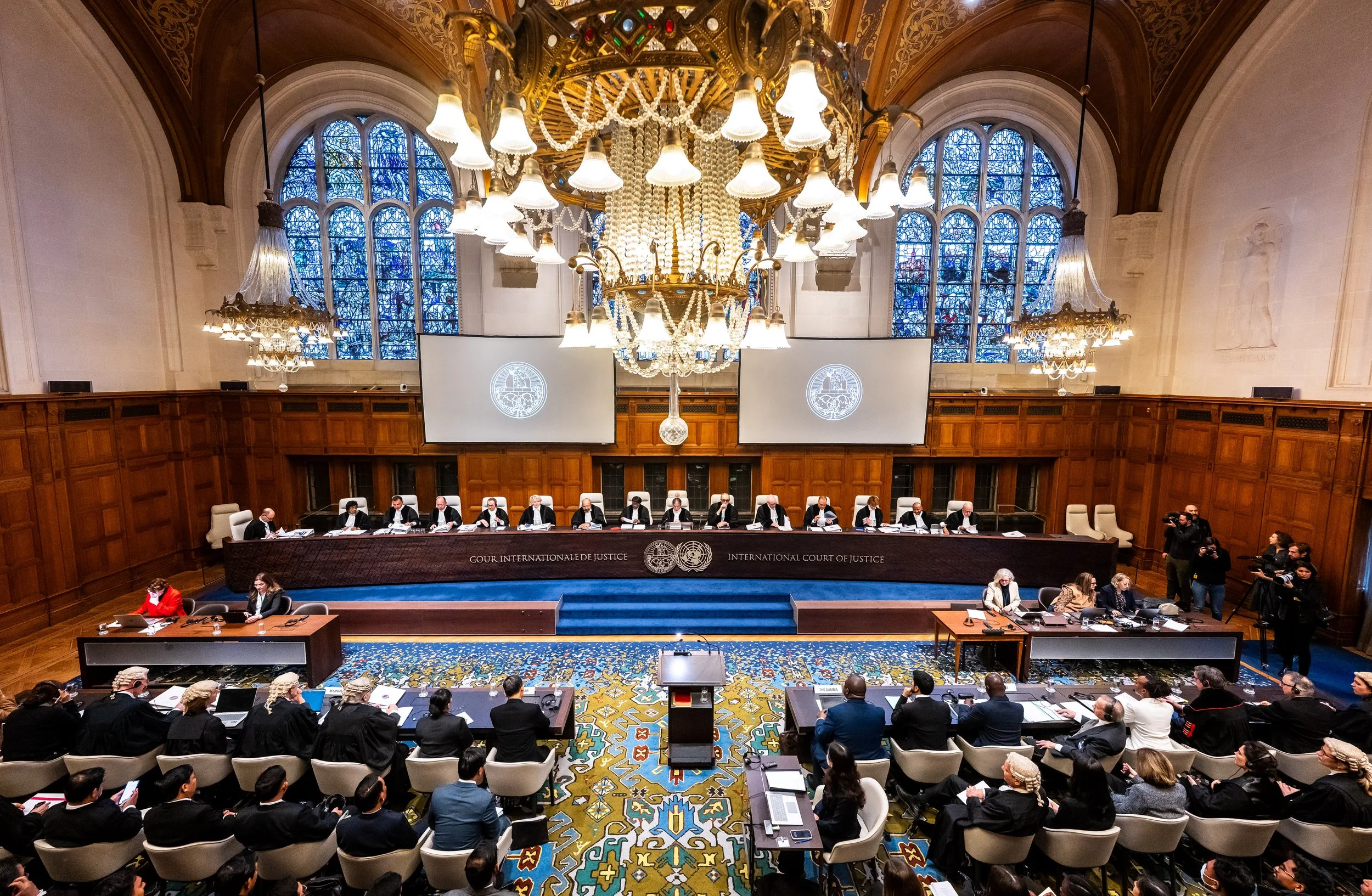
Seven years after the case was first brought, hearings opened in The Hague on Monday. Myanmar, first represented at the International Court of Justice by its one-time leader, Aung San Suu Kyi, claimed that Gambia was too disconnected from the situation to bring a case under the 1948 Genocide Convention, signed in the aftermath of the horrors of the Second World War.
In 2022, judges at the court rejected that argument and allowed the proceedings to move forward. By then, Myanmar had undergone a military coup, Suu Kyi had been jailed, and the lives of some of the most persecuted people in the world had worsened.
Now an estimated 1.4 million Rohingya – nearly the entire population – have been displaced.
Myanmar denies that the Rohingya are citizens or one of the country’s 135 ethnic groups, claiming they are illegal immigrants from Bangladesh. Rohingya cannot serve in public office, cannot hold government jobs and are unable to travel freely.
The country claims the death and destruction are part of an “internal armed conflict.”
“The allegations made by The Gambia are flawed and unfounded in fact and law,” Myanmar’s foreign ministry said in a statement.
Hijra people in Myanmar face additional discrimination. Laws enacted when the country was still a British colony ban same-sex relationships. A person cannot legally change their gender, and there are no protections against discrimination.
A 2024 UN report found that sexual harassment and rape by police and security forces is widespread. “LGBT people, particularly individuals who are visibly transgender, have been subject to some of the most cruel and inhumane forms of violence,” the report says.
The proceedings at the International Court of Justice are the first time the plight of the Rohingya have been heard in an international court. “It matters that the highest court in the world is going to be listening to them,” Antonia Mulvey, the executive director of Legal Action Worldwide, which brought R and other Rohingya to The Hague for the hearings.
The International Court of Justice adjudicates disputes between countries; it is not a criminal court. No individual members of the Myanmar government have been charged with a crime.
But in opening statements on Monday, Gambian Justice Minister Dawda Jallow told the judges the country had “a sense of responsibility” to bring the case following its own 20-year experience with a repressive military government.
The court does not typically hear witness testimony, but at the request of Gambia and the urging of victims groups, several days of the three weeks of hearings will be devoted to closed-door statements from Rohingya.
There is some hope that members of the Myanmar regime may eventually face their own justice. Down the road from the International Court of Justice, prosecutors at the International Criminal Court requested an arrest warrant for Myanmar’s acting president, Min Aung Hlaing, in 2024. When judges at the court authorized the opening of an investigation in 2019, the decision notes that hijra were “targeted for rape and sexual violence.”
Mulvey’s organization is also involved in a case in Argentina on behalf of the Rohingya.
A final decision from the International Court of Justice will take months or even longer. Should Gambia prevail, the court could order Myanmar to allow the Rohingya to return and extend them full citizenship rights.
In the convention’s nearly 80-year history, the court has never concluded a country has committed genocide. In 2007, judges ruled that Serbia had failed to prevent the Srebrenica genocide — the 1995 killing of more than 8,000 Muslim men and boys during the Bosnian War — but did not hold the country directly responsible for the massacre.
R would like to see that change. The outcome will have a “huge impact on what our future will look like and if we will ever be able to go back and start our life, like a new life with better opportunities, a life of peace,” she said.
Molly Quell is a Dutch-American journalist based in The Hague, Netherlands. She was previously with the Associated Press and her work has appeared in the Guardian, the Economist, and Mother Jones.




They are all very brave, I hope they get justice and are able to rebuild their lives