As the American public grows more hostile to transgender people, representation of trans lives in mainstream media is vanishing. According to GLAAD, a significant number of queer characters on TV will simply not return. Something about times like these drives one to read more comics.
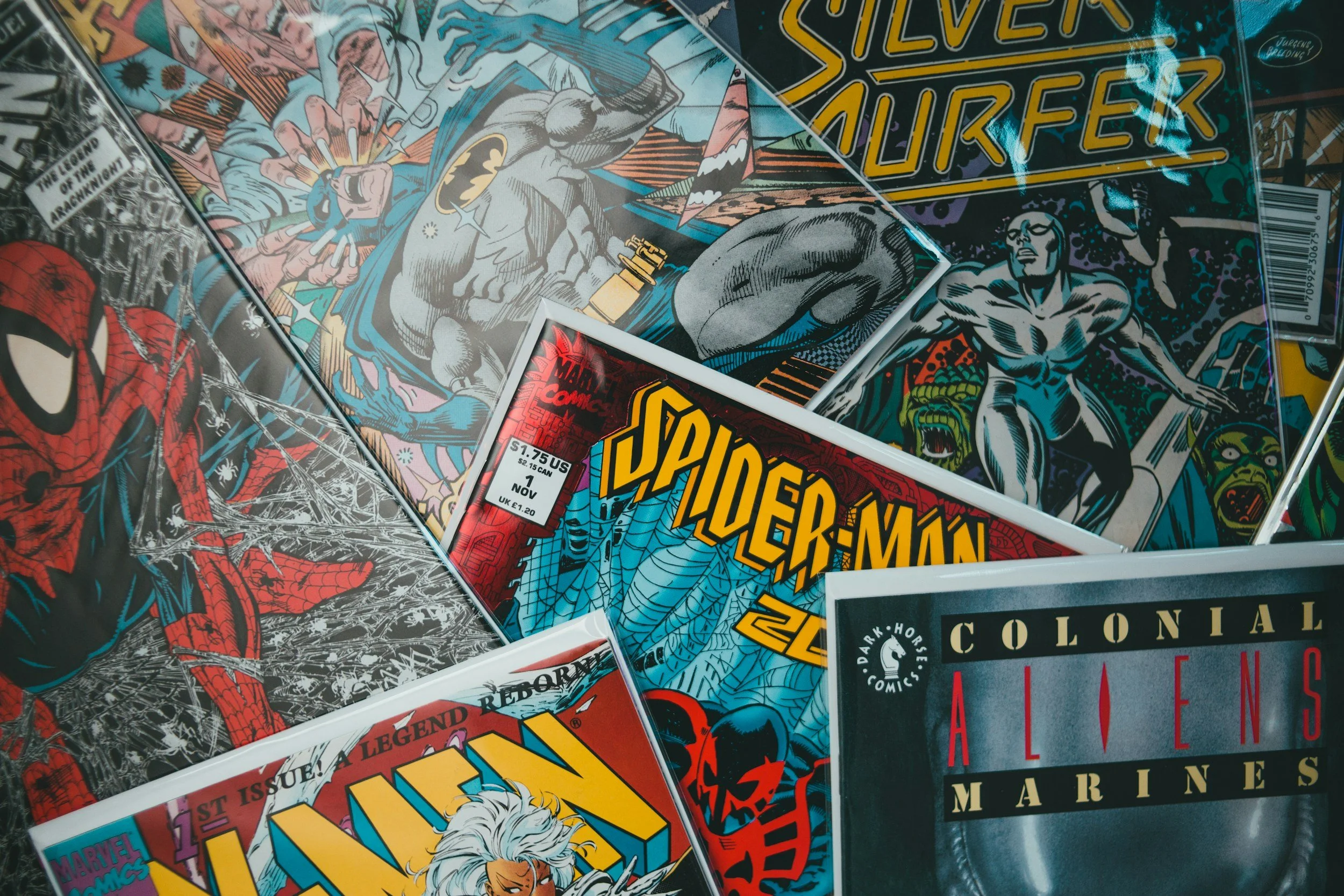
As trans creators and characters are forced out of mainstream media, some are finding a niche outside of film and television, particularly in comics. Comics and graphic novels have had a long history of diverse representation and progressive politics, from the introduction of Black Panther during the 1960s heyday of the Civil Rights movement to the LGBTQ+ characters of Doom Patrol under the writer Rachel Pollack. However, there are darker chapters in this history, especially in regards to the treatment of writers from marginalized communities by the Marvel and DC editorial staff.
In order to better understand both of these aspects, Assigned Media spoke to two trans comic creators. Gretchen Felker-Martin is an author who has previously worked with DC. Keezy Young is an independent graphic novelist. Both have experienced roadblocks in the industry of comics, but both have also created stories that will outlive those roadblocks in the minds of readers.
Gretchen Felker-Martin may be best known for Manhunt, which was #1 on Vulture’s list of best books of 2022. She followed up with Cuckoo and then Black Flame, the latter of which she said is her proudest work from a personal standpoint. Black Flame is a fast-paced examination of how a German sniff film changes the life of the novel protagonist. For Felker-Martin it felt like a creative stretch. “I challenged myself to do something outside my wheelhouse, to be tight and focused where usually I’m interested in sprawl, and I’m very proud of the result,” she said. She is currently working on a story about criminal shapeshifters in New Hampshire called “CHIMERA”.
In addition to her novels, Felker-Martin has written for DC Comics, including a contribution to the 2024 DC Pride anthology, where she wrote a story featuring the canonically bisexual, plant-themed Batman villain Poison Ivy.
Additionally, she was offered the opportunity to write a limited series about Red Hood, a former protege of Batman who became a gun-wielding vigilante. Taking place outside the ordinary realm of DC superheroes, the series was set to traverse a mysterious new city inspired by New Orleans. Readers never had the chance to engage with the work, however, because Felker-Martin was abruptly dropped the day it was supposed to go on sale. Copies of the first book in the series were pulled from comic book shelves, all due to some Bluesky posts of Felker-Martin criticizing provocative right-wing statements by the deceased Charlie Kirk.
According to Felker-Martin, she was not warned. Although she was offered an opportunity to apologize, she declined, as she understood the firing was unlikely to be rescinded even if she did.
When asked if she stood by her statements, she said yes, but added “I don’t think I would speak on Kirk’s death again if I could go back because of the stress it caused my family and I.” Felker-Martin also reported discriminatory snubs due to her status as a trans woman, including exclusion from certain conventions. Many people suspect Felker-Martin was used as a scapegoat because of her status as a transgender woman—she was the highest-profile firing from DC Comics during the aftermath of Kirk’s death. Felker-Martin declined to comment on previous specific instances of transphobia other than those coming in the aftermath of her firing, citing professional etiquette as a comic creator.
But all is not unwell in the world of comics. In independent comics, an alternative world to the corporate DC and Marvel has grown by leaps and bounds, as seen with very popular TV series such as Invincible, The Boys, Sweet Tooth, Umbrella Academy and The Walking Dead all being based on indie comics. Keezy Young is a Seattle-based comic artist specialized in writing for children and young adults, who draws influence from creators such as Mike Mignola, David Aja or Fiona Staples in their colorful and evocative art style.
Much of their work is in the horror genre for a simple reason, which is that this is where their passion lies. “I have always loved horror, though, ever since I was a little kid reading Goosebumps and Scary Stories To Tell in the Dark, and watching X-Files and Stephen King movies through the slats in the stairs after I was supposed to go to bed,” Young told Assigned Media.
Their latest and most well known work is Hello Sunshine, a graphic novel about a troubled teenage boy who disappears and never comes back.
“I came up with the first inklings of Hello Sunshine while recovering from a very difficult year of psychosis and mania and depression, after finding out that my nana, who I inherited my illness from, was dying.” The book deals with these themes in a thoughtful and compassionate way, almost like a friend consoling you in the aftermath of a personal loss. Hello Sunshine has won a Graphic Novel & Comic Round Table Award (abbreviated as GNCRT) from the American Library Association.
Hello Sunshine depicts characters from a variety of backgrounds, especially queer ones. Alex, the instigating character in the story’s conflict, is gay as is his love interest Noah, who is the first perspective character, and two other protagonists are respectively lesbian and transgender.
In talking about this, Young says “I’m surrounded by a vast variety of different ways queerness presents itself, different people who see themselves as queer (or who don’t), and different ways that queerness impacts people’s lives. It was important to me to suggest at least some of that vastness in Hello Sunshine.”
With a subject like mental illness, stigmatization can be the norm. Young says they worked to avoid historically demonizing tropes in horror media around mental illness in the work, even though an instance of psychosis is a major catalyst in the story of Hello Sunshine. “I would love for kids to come away with a greater understanding and compassion for people who experience psychosis, as well as some tools to be able to recognize its symptoms,” said Young.
“People with psychosis can have meaningful lives, with romance, friendship, and joy. But they need support from the people who love them to get there.”
When asked whether censorship played a role in the development of Hello Sunshine, Young responded that they had not faced any censorship from their publisher, and that they were not aware of any attempts to ban Hello Sunshine, with the caveat “that doesn’t mean it won’t be, or that it hasn’t been quietly just kept off the shelf.”
Young’s primary concern is that creators will be pressured by the modern social environment to self-censor. Even without overt bans, they say, there may be consequences for queer fiction, especially for young readers. Citing organizations such as Authors Against Book Bans, Young told Assigned Media “I would urge any author with concerns to not give up out of hand, and certainly not to give up without a fight”
Both Felker-Martin and Young want the field of comics to continue to grow. When Felker-Martin was asked on how trans authors can get into comics, she cautioned against corporate entanglement but encouraged them to “Create a zine with your friends.” Despite her experiences with the industry, she encourages creators to find their own spaces and own voice.
Keezy Young concluded the interview by saying in reference to the medium of comics “It’s such a creative medium, and one that anybody can do if they have a pen and some paper. I would love it if Hello Sunshine was the reason they picked that pen up.” There’s immense possibility with independent comics as a field, and for a trans person with a creative mind and a good eye, it could be a livelihood, a lifeline and a good way to pick up a pen.
Adi Kung is a journalist, writer and poet. She currently resides in New York.